Short Drama
Reset: Fifteen Episodes on the Same Bus
The tightest time-loop thriller Chinese television has produced, and it never leaves the bus for long.
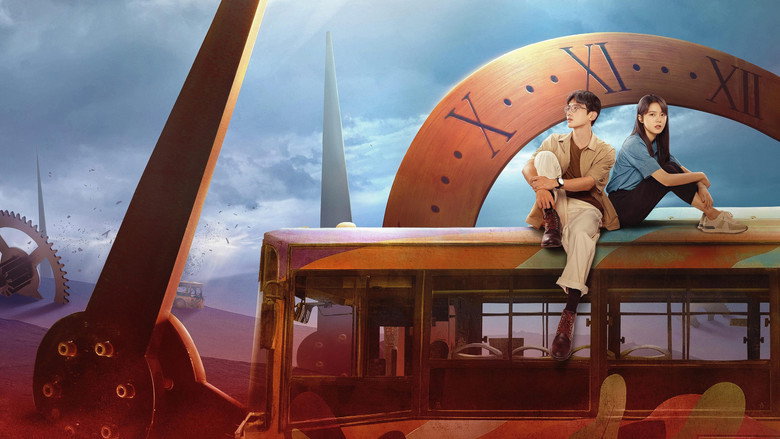
At a glance
- Chinese title
- 开端 (Kāiduān)
- Format
- 15 episodes, about 40 minutes each
- Genre
- Thriller, time loop
- Setting
- A city bus and the streets around it
- Official streaming
- Viki, iQIYI (region dependent)
- Best for
- Viewers who want a puzzle with a body count
What it is about
A university student and a game designer are on the same city bus when it explodes. Instead of dying, they wake up at the start of the ride and discover that the loop resets every time the bus goes up in flames. Each repetition gives them a little more information and a little less time.
Their task is not just to survive. Someone planted the bomb, and the loop will not end until they identify the person and stop them. That turns a science-fiction premise into an investigation conducted in fifteen-minute increments, with two ordinary people conducting it.
Who should watch it
Best for: viewers who like rules, clues and tight episode construction.
- You enjoyed time-loop films and want a longer version that earns its length.
- You prefer tension built from ordinary people rather than action set pieces.
- You want a Chinese thriller with no prior genre knowledge required.
Skip it if repetition frustrates you. The first three episodes deliberately replay the same ride.
Three reasons to watch
1. The loop has rules
The show establishes what resets, what persists and what the characters can carry back. Once the rules are clear, the audience can solve alongside the leads, and every new attempt is a genuine experiment rather than a scripted coincidence.
2. The bus is a social cross-section
Passengers include a delivery worker, a live-streamer, a commuter with a suitcase, a father and son. The show uses the loop to reveal them slowly, which turns a single set into an ensemble drama. You learn who people are by watching how they behave when they think nothing matters.
3. It is short and complete
Fifteen episodes, no sequel hook, no padded middle. The mystery resolves, the loop closes, and the final episode explains the premise without a lecture. For viewers new to Cdrama, it is one of the safest entry points.
The hidden culture detail
The title Kaiduan means "beginning" or "opening", and it is the word used for the start of a story, a play or a meeting. The show's Chinese audience read the title as a promise that the loop is a narrative device rather than a puzzle box. There is also a quiet social layer: the passengers are ordinary working people, and the drama treats their routines with respect. The bomber's motive is rooted in a very Chinese fear of being invisible inside a system, which is why the final confrontation is about recognition rather than ideology.
How the loop is structured
Early episodes repeat the ride with small variables. Once the leads learn to act before the explosion, the show expands outward: bus stops, a police station, apartments, a shopping centre. The repetition is not a budget trick; it is how the investigation works, and the show keeps introducing new spaces to avoid stagnation.
Watch the clock. The time of the explosion is fixed, and the gap between the reset point and the blast is the episode's actual countdown. If a scene feels slow, check how much time is left.
Why the loop is not a cheat
Time-loop stories often break their own rules when the plot needs a shortcut. This one does not. Memory persists, objects persist, injuries reset, and the window between the start of the ride and the explosion stays fixed. Once those four rules are clear, the audience can predict what a new attempt will cost, and the show respects those predictions.
The rule that matters most is information. The characters cannot carry a weapon or a written note back with them, but they can carry knowledge, which means progress is always earned by observation. Every repetition adds one fact: a passenger's habit, a stop, a phone call, a hesitation. The series is essentially a detective story where the detective has to re-interview the same witnesses from scratch.
The show also refuses the easy escape. The leads could leave the bus, and at one point they do. The moral engine of the series is that leaving is not enough: the loop will not close while the bomb still exists, and they know it. That choice turns a puzzle into a character test.
Notice how the episodes vary repetition with perspective. Instead of replaying the same ten minutes, the camera follows a different passenger or a different part of the city. It is the same ride, but rarely the same scene, which is why fifteen episodes never feel padded.
Why two leads are enough
The series keeps its cast small on purpose. A student and a game designer are the only two people who remember each loop, which means every other passenger is met fresh each time. That asymmetry is the engine of the drama: the audience and the leads know more than everyone around them, and the emotional cost is having to explain the same truth again and again to people who will forget it.
It is also why the romance works without a single grand gesture. Intimacy here is shared knowledge. Two strangers become close because they are the only witnesses to each other's effort, and the show never needs a declaration to prove it.
Where to watch
Licensed internationally through Viki (Rakuten) with English subtitles, and also available via iQIYI International. For a slower, more intimate mystery, read our The Long Night guide.
Where to watch officially
These buttons open the licensed platform's own search page for this drama. Availability changes by country, so the platform page is the final word on subtitles and regions.
No torrents, mirrors or Google Drive copies. If a link ever lands somewhere unofficial, tell us at [email protected] and we will replace it.