Suspense Cdrama
The Long Night: The Crime Drama About Fighting a Closed Case
Less whodunit, more why-would-a-good-man-do-this. The most morally serious crime drama of its year.
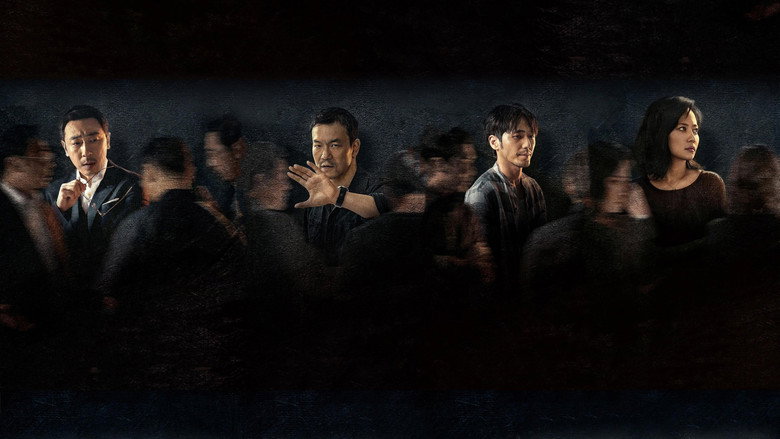
At a glance
- Chinese title
- 沉默的真相 (Chénmò de Zhēnxiàng)
- Released
- 2020, 12 episodes
- Setting
- Contemporary China, three time periods
- Starring
- Liao Fan, Bai Yu, Tan Zhuo
- Based on
- A novel by Zi Jinchen
- Official streaming
- Viki (region dependent)
What it is about
A man is stopped at a subway station with a suitcase that contains the body of a well-known prosecutor. He confesses immediately, then refuses to explain. As the police dig, the dead man's past opens up: a young prosecutor who once tried to overturn a conviction, a village teacher who would not let a case go, and a system that preferred a closed file to an awkward truth.
The series runs across three timelines and three men who each inherit the same unfinished task. It is a crime story, but its real subject is the cost of insisting on a correction when everyone else has moved on.
Who should watch it
Best for: viewers who like investigative procedurals and stories about institutions under pressure.
- You enjoyed Spotlight or Zodiac and want the Chinese equivalent.
- You are interested in how wrongful convictions are challenged in practice.
- You want a serious drama with almost no comic relief.
Skip it if you want a light watch or a tidy ending. The show is about how long justice takes.
Three reasons it holds up
1. The three-timeline structure earns its complexity
Each generation of investigators learns something the previous one could not prove. The cutting between timelines is not a gimmick; it shows how evidence and courage have to be passed on like a relay baton.
2. The performances are restrained
Liao Fan plays the older prosecutor as a man who has already decided to pay a price. Bai Yu plays the younger one as someone who has not yet learned how much it will cost. The gap between them is the show's emotional core.
3. It takes procedure seriously
Appeals, jurisdiction, evidence chains and press pressure all matter. The drama understands that changing an official conclusion is a bureaucratic process, not a single heroic speech.
The hidden culture detail most viewers miss
One of the key mechanisms in the story is xinfang (信访), the petition system that lets ordinary citizens bring complaints to higher authorities when local channels fail. It is a real institution, and it is often the only route for people who cannot afford a lawyer or who distrust the local police. The series shows how a petition can keep a case alive for years, and how exhausting that is for the person filing it. When a character travels to petition in another city, the subtitle makes it sound like a formality. In reality it is a long, uncertain and often humiliating process, which is exactly why the show treats it as an act of endurance.
How the three timelines connect
The show cuts between three periods, and the transitions are deliberately unmarked. A character in one timeline will finish a sentence that another character starts years later. Once you recognise the device it becomes the series' best feature: it makes the investigation feel like a conversation across generations, with each speaker only holding part of the truth.
The easiest way to stay oriented is by the object, not the person. A body, a photograph, a written statement and a piece of evidence move between timelines, and each time one reappears it has changed hands. Track the object and you will always know where you are and roughly when.
The middle timeline is the hinge. It shows a young man with everything to lose deciding to pursue a case his superiors want closed. The later timeline shows what that decision cost, and the earliest timeline shows why the case mattered in the first place. Watching them out of order is the point, because the audience learns the truth in the same fragmentary way the investigators did.
Do not expect a courtroom finale. The climax is bureaucratic and emotional rather than theatrical, and that is what makes it credible. Real corrections to official conclusions rarely arrive in a single dramatic moment. They arrive after years of documents, petitions and people refusing to sign the wrong form.
If the first episode feels like it is holding something back, it is. The show opens with a confession precisely so that the mystery is not who did it, but why a good man would arrange his own destruction. Keep that question in mind and the structure will feel purposeful rather than confusing.
One small viewing tip: the official subtitles are generally careful with legal terms, but the Chinese titles for prosecutors and investigators do not map neatly onto English ones. Do not worry about the exact rank. What matters is who has the authority to reopen a file and who does not, because that is where the drama's pressure comes from.
What to watch after it
For a shorter, more intimate crime story, read The Bad Kids. If you want a historical thriller with a hard deadline, see The Longest Day in Chang'an. For a modern drama about institutions and family, try Nothing But Thirty.
Where to watch officially
These buttons open the licensed platform's own search page for this drama. Availability changes by country, so the platform page is the final word on subtitles and regions.
No torrents, mirrors or Google Drive copies. If a link ever lands somewhere unofficial, tell us at [email protected] and we will replace it.