Suspense Cdrama
The Bad Kids: A Summer Holiday Murder Story
A short, sunlit crime drama where the most dangerous thing in the room is a child who has learned to lie.
At a glance
- Chinese title
- 隐秘的角落 (Yǐnmì de Jiǎoluò)
- Released
- 2020, 12 episodes
- Setting
- A small coastal city, one summer
- Starring
- Qin Hao, Wang Jingchun, Rong Zishan
- Based on
- A novel by Zi Jinchen
- Official streaming
- Viki (region dependent)
What it is about
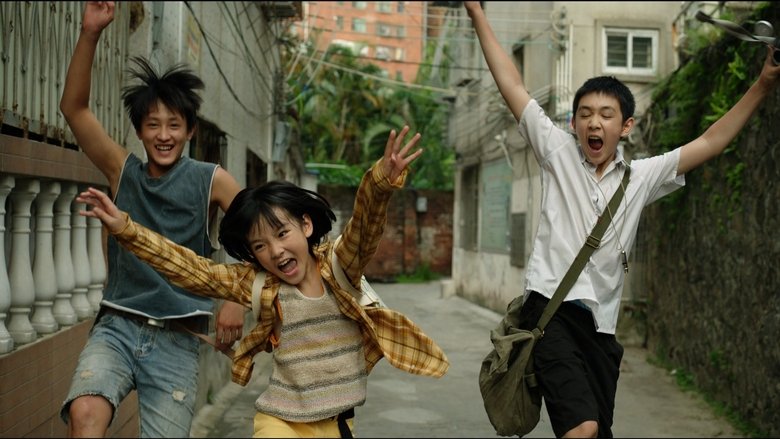
Three children from different parts of a small city go hiking and accidentally record a man pushing his parents off a cliff. Instead of going to the police, they decide to use the footage. The man, Zhang Dongsheng, is a mild-mannered teacher with a debt problem and a talent for sounding reasonable. What follows is a negotiation between a killer and three kids who are much better at lying than anyone expects.
The series is twelve episodes, and it uses every one. There are no filler arcs. The summer holiday setting gives the children freedom that adults mistake for innocence, and the show slowly reveals how much they understand.
Who should watch it
Best for: viewers who like contained crime stories, morally complicated children and atmospheric small-town settings.
- You enjoyed Sharp Objects or True Detective but want a shorter commitment.
- You are interested in Chinese social detail outside the big cities.
- You like an ending that refuses to explain itself completely.
Skip it if you need a clear hero or cannot handle violence involving children.
Three reasons it holds up
1. The child performances are extraordinary
Rong Zishan plays Zhu Chaoyang as a boy who is smart enough to know he is being used and desperate enough to go along. The show never writes him as a miniature adult; it writes him as a child making adult calculations.
2. The villain is banal in the right way
Zhang Dongsheng is not a mastermind. He is a man who keeps making the smaller, easier choice until the choices become unforgivable. Qin Hao plays him with a smile that never quite reaches the eyes.
3. The heat is a character
The series is shot in bright, overexposed summer light. Everyone is sweaty, tired and stuck. The atmosphere makes the violence feel closer to real life than a stylised noir would.
The hidden culture detail most viewers miss
A lot of the story turns on the shaonian gong (少年宫), the local children's palace where kids take cheap after-school classes. In the 1990s and 2000s these centres were a normal part of urban childhood, offering music, calligraphy and exam prep to families who could not afford private tutoring. The show uses the building as a neutral public space where children from different backgrounds can meet without their parents watching. That freedom is what makes the plot possible. It also quietly documents a specific moment in Chinese city life, before smartphones and private tutoring changed how children spend a summer.
What the ending is really doing
The final episodes are the part people argue about, and that is intentional. The show gives you more than one way to read what happened on the boat and in the water, and it refuses to film a clean confession. That ambiguity is not a cop-out. The drama has spent twelve episodes showing how a story can be managed, and it applies that lesson to its own ending.
Pay attention to who is telling the story at any moment. Much of what you see is filtered through a child's memory, and children in this series are unreliable in a very specific way: they do not lie about facts so much as leave out the parts that would make them look guilty. Once you notice that, the last episode reads differently, and earlier scenes start to look like rehearsals.
The original Chinese title is a clue. It translates closer to "the hidden corner", which points at the parts of a life that adults choose not to look at. The English title shifts the focus to the children, but both versions ask the same question: what happens when nobody in authority is willing to look closely?
If you finish and feel unsettled, that is the intended response. The show is not interested in punishing anyone on your behalf. It is interested in the moment when a person decides that the easier version of events is the one they will live with, and how young that decision can happen.
A note on the source novel: the book is darker and more explicit about the children's choices, and the adaptation softened several details for broadcast. Reading the original after watching is worthwhile if you want the bleaker reading, but the series stands on its own without it.
The sound design deserves a mention too. There is almost no music during the tense scenes, only cicadas, traffic and the hum of an air conditioner. That silence is what makes the summer feel oppressive rather than nostalgic, and it is a large part of why the show stays with people.
Where to go next
For another twelve-episode crime drama with a social conscience, read The Long Night. If you want a historical thriller with the same clock-driven tension, try The Longest Day in Chang'an. For a modern family drama that is warmer but equally well observed, see Go Ahead.
Where to watch officially
These buttons open the licensed platform's own search page for this drama. Availability changes by country, so the platform page is the final word on subtitles and regions.
No torrents, mirrors or Google Drive copies. If a link ever lands somewhere unofficial, tell us at [email protected] and we will replace it.