Modern Cdrama
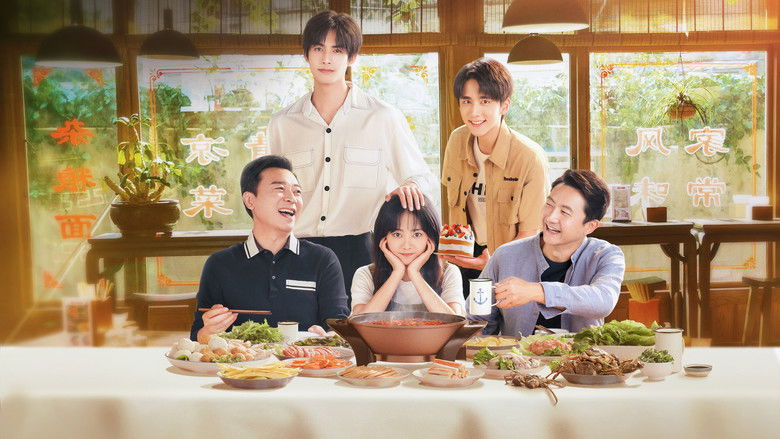
Go Ahead: Three Kids, Two Dads and One Noodle Shop
The best modern Cdrama about family is not about blood. It is about who shows up with dinner.
At a glance
- Chinese title
- 以家人之名 (Yǐ Jiārén Zhī Míng)
- Released
- 2020, 46 episodes
- Setting
- Contemporary city, two neighbouring households
- Starring
- Tan Songyun, Song Weilong, Zhang Xincheng
- Tone
- Warm comedy that turns serious
- Official streaming
- Viki, Netflix (region dependent)
What it is about
Li Haichao runs a small noodle shop below his apartment. He is raising his daughter Jianjian alone when two boys drift into his life: Ling Xiao, whose mother has left and whose father is useless, and He Ziqiu, whose mother has disappeared after a family crisis. The three children grow up eating at the same table, calling the same man dad, and defending each other in the way siblings do.
Then the adults return. The second half of the series is about what happens when biology asks for the children back, and when the children start to have their own reasons for leaving. It is a family drama, a coming-of-age story and, in its best scenes, a comedy about a very small apartment.
Who should watch it
Best for: viewers who want warmth without saccharine, and adults who remember being a teenager in a household that was not quite normal.
- You liked the family texture of This Is Us but want less melodrama and more food.
- You want a modern Cdrama that is not a romance first.
- You are learning Chinese family vocabulary; the daily scenes are easy to follow.
Skip it if you need a plot engine in every episode. Much of the pleasure is hanging out.
Three reasons it holds up
1. The fathers are written as people, not types
Li Haichao is not a saintly single dad. He is tired, proud, sometimes petty and very good at making noodles. The show lets him be wrong, especially when he tries to keep the children close.
2. The sibling relationship has real history
The three leads have years of shared jokes, debts and resentments by the time the adult plot arrives. That history makes the later conflicts land. You believe them as a family because you watched them become one.
3. Food carries the emotion
Noodles, hotpot, late-night snacks and packed lunches do the work that speeches would do in a lesser show. A bowl on the table means someone is still trying.
The hidden culture detail most viewers miss
The noodle shop is doing more than feeding people. In Chinese cities, the small neighbourhood restaurant is a social institution: it knows your schedule, extends credit, passes messages and acts as a second living room for people whose own homes are too small or too complicated. The show treats Li Haichao's shop as a semi-public family space, which is why neighbours, classmates and eventual in-laws all pass through it. When the series wants to show that a relationship has been repaired, it puts both people at that table. The shop is the family's actual address, not the apartment above it.
Preparing for the midpoint turn
The first half of Go Ahead is mostly warm: meals, school, neighbours and the comedy of three children sharing one bathroom. Then the series changes gear. The adults who left come back, and the story starts asking whether a family built by choice can survive biology and distance. Viewers who expected a gentle sitcom sometimes feel ambushed by this shift. It is worth knowing that the turn is deliberate, and that the show has been planting it since the first episode.
Pay attention to the promises the children make to each other. The second half tests every one of them. The series is less interested in who ends up with whom than in whether the three of them can remain a family once they have separate lives and separate obligations to the parents who left.
If the tonal change bothers you, take a short break rather than pushing through. The later episodes are much better once you accept that the show is not going to stay in the noodle shop forever. The warmth does not disappear; it just becomes something the characters have to work to protect.
One more thing: the food scenes are not filler. When a character cooks for someone, it is the show's way of apologising, proposing or asking for help. If you skip those scenes, you miss the emotional transitions.
The three young leads age in real time across the series, and the show uses that to make the passage from primary school to adulthood feel earned rather than skipped. Minor characters reappear after years with new jobs and new problems, which is exactly how a neighbourhood actually changes. That long memory is why the finale lands: by then you have watched these people grow up, and the reunion means something the first episode could not have promised.
If you are watching with a parent, this is one of the few Cdramas that gives both generations a fair hearing. The adults who left are not simply villains, and the children who stayed are not simply victims.
What to watch after it
If you want the same city-family feeling with adult problems, try Nothing But Thirty. For a romance built on long friendship, see You Are My Glory. For a historical family drama with the same interest in households, read The Story of Minglan.
Where to watch officially
These buttons open the licensed platform's own search page for this drama. Availability changes by country, so the platform page is the final word on subtitles and regions.
No torrents, mirrors or Google Drive copies. If a link ever lands somewhere unofficial, tell us at [email protected] and we will replace it.