Historical Cdrama
The Story of Minglan: The Household Drama That Rewards Patience
Less swordplay, more ledgers. This is the historical drama for people who think inheritance law is a weapon.
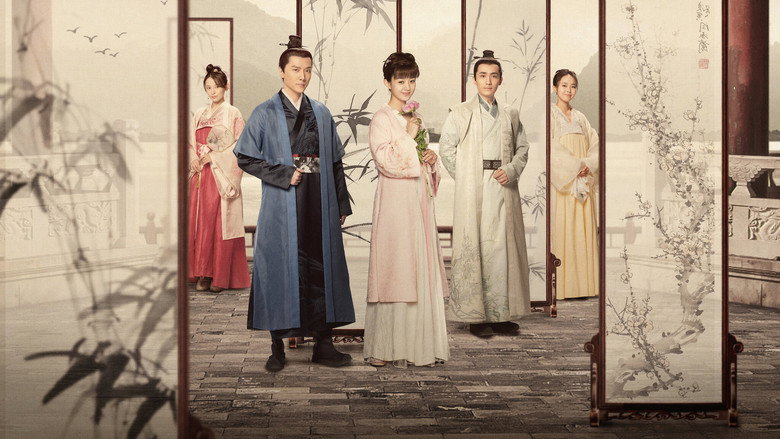
At a glance
- Chinese title
- 知否知否应是绿肥红瘦 (Zhī Fǒu Zhī Fǒu)
- Released
- 2018, 73 episodes
- Setting
- Northern Song official family
- Starring
- Zhao Liying, Feng Shaofeng, Zhu Yilong
- Pace
- Slow, domestic, cumulative
- Official streaming
- Viki, Netflix (region dependent)
What it is about
Sheng Minglan is the sixth daughter of a mid-ranking official, born to a concubine and raised by a grandmother who teaches her to hide her intelligence. The family is not poor and not safe. A father's favour, a marriage arrangement or a dowry can change a daughter's whole life, and the women around Minglan compete for those levers with gossip, medicine and paperwork.
The first third is a childhood and household survival story. The middle is a marriage negotiation. The last third is about running an estate while enemies inside and outside the family test every rule Minglan has learned. It is a long series, and it is meant to be lived in.
Who should watch it
Best for: viewers who like Downton Abbey-style household politics, slow-burn romance and competence porn.
- You enjoy watching someone solve problems with records, food, servants and timing.
- You are willing to give the first ten episodes time to set up a large family.
- You want a romance where the couple becomes a team before it becomes a couple.
Skip it if you need a plot hook in the first twenty minutes or a small cast.
Three reasons it holds up
1. The domestic detail is the plot
Who controls the kitchen, who signs for a delivery, whose servant is allowed to enter which courtyard: these small jurisdictions decide who eats, who is believed and who is married off. The show treats household logistics as a political map.
2. Minglan is allowed to be calculating
She is not a saint. She withholds information, uses other people's assumptions and occasionally lets a rival destroy himself. The drama is careful to show the cost of each choice, which keeps her from becoming a simple wish-fulfilment figure.
3. The marriage is a negotiation, not a rescue
Gu Tingye is not a prize handed over at the end. The two characters spend a long time assessing each other's reliability, and the series makes the case that trust is built through repeated, unglamorous tests.
The hidden culture detail most viewers miss
The family runs on the difference between di (嫡) and shu (庶): children of the legal wife versus children of a concubine. This distinction shapes inheritance, marriage prospects and even how servants address a young master. Minglan is shu, which is why her intelligence is treated as a liability rather than an asset. When a character says someone is "not qualified", the subtitle sounds snobbish, but the original is quoting a legal and ritual order that determines property. The entire plot is a study of a girl learning to operate inside a system that has already decided what she is worth, and then making that system pay attention.
A family-tree viewing guide
The Sheng household is large enough that the first episodes can feel like a history lesson. Do not try to learn every cousin. Learn the father, the legal wife, the favoured concubine, the grandmother and the two or three siblings who matter to Minglan. Everyone else is context, and the show will remind you when they become important.
The grandmother is the emotional centre of the early episodes. She teaches Minglan how to survive by appearing unremarkable, and her health becomes a clock in the background. When her position weakens, Minglan's protection weakens with it. That is the engine of the first third, more than any single scheme.
The marriage plot arrives later than viewers expect. If you are watching for romance, the first twenty episodes are mostly childhood, household politics and the slow accumulation of evidence about who is trustworthy. That patience is the point: the later partnership works because you have watched both people learn what the other is like under pressure.
A practical note on names: characters are addressed by rank, family position and nickname, sometimes in the same scene. If a subtitle seems to introduce a new person who never appears again, it is probably an honorific rather than a name. The show is more interested in hierarchy than in clarity, and that is part of its texture.
One more reason the series rewards patience: it is unusually interested in money. Dowries, shop accounts, inheritance shares and the cost of a wedding are all discussed openly, and the plot turns on who controls the household budget. In most costume dramas wealth is scenery; here it is leverage. Once you start tracking the accounts, the family arguments stop looking petty and start looking like a takeover.
The costumes also encode status quietly. A change of hairpin or the quality of a robe signals a shift in favour before anyone says it aloud, and the show trusts you to notice. That restraint is why Minglan is often recommended to viewers who found other historical dramas too loud.
Where to go next
For a harem version of the same hierarchy, read Empresses in the Palace. If you want the strategist version, Nirvana in Fire. Viewers who like family drama in a modern setting should try Go Ahead.
Where to watch officially
These buttons open the licensed platform's own search page for this drama. Availability changes by country, so the platform page is the final word on subtitles and regions.
No torrents, mirrors or Google Drive copies. If a link ever lands somewhere unofficial, tell us at [email protected] and we will replace it.