Modern Cdrama
The First Half of My Life: When the Marriage Ends at 37
A drama about a woman who was excellent at being married and has no idea how to be anything else.
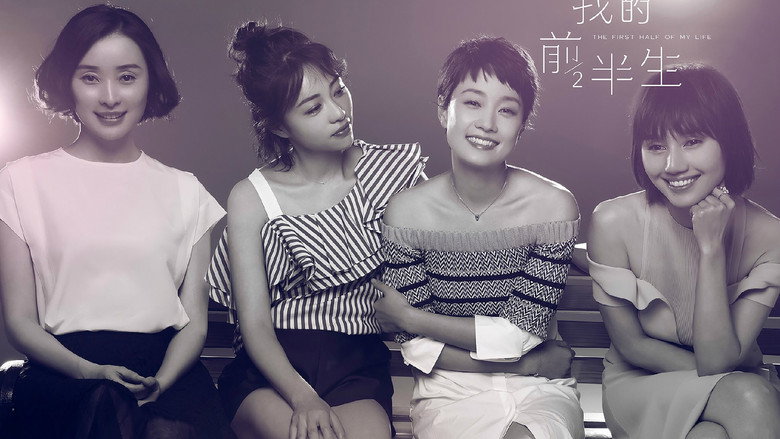
At a glance
- Chinese title
- 我的前半生 (Wǒ de Qiánbànshēng)
- Released
- 2017, 42 episodes
- Setting
- Contemporary Shanghai
- Starring
- Ma Yili, Jin Dong, Yuan Quan
- Based on
- A novel by Yi Shu
- Official streaming
- Viki (region dependent)
What it is about
Luo Zijun has been a full-time wife for ten years. Her husband Chen Junsheng has a good job, their apartment is comfortable, and her main job is to look after the house and their son. Then he tells her he wants a divorce. The woman he is leaving her for is not glamorous or cruel; she is a colleague who listened to him.
The rest of the series is Zijun learning to earn money, take criticism and make decisions without a husband's approval. Her best friend Tang Jing is a consultant who pushes her toward independence, and Jing's boyfriend He Han becomes a complicated presence in Zijun's new life.
Who should watch it
Best for: viewers who like career-and-identity dramas and do not need a likable protagonist at every moment.
- You want a show about work as a route to self-respect.
- You enjoy complicated female friendship, including the parts that sour.
- You are interested in how class and marriage interact in a Chinese metropolis.
Skip it if you need the heroine to make only good decisions. Zijun is often passive, proud and naive, and the show lets her be.
Three reasons it holds up
1. It takes work seriously
Zijun's first jobs are humiliating in ordinary ways: folding clothes, learning software, being corrected by people younger than her. The show does not skip the boring middle of becoming employable.
2. The divorce is not a villain story
Chen Junsheng is weak and selfish, but the marriage failed for reasons both people contributed to. That complexity makes the breakup sadder and more useful than a simple betrayal plot.
3. Tang Jing is the most interesting character
The friend who has it together is also the friend who is most afraid of losing control. Her arc asks whether independence can become another performance, which keeps the show from being a simple "get a job" fable.
The hidden culture detail most viewers miss
The phrase quanzhi taitai (全职太太), "full-time wife", carries a specific social charge. It sounds respectable, but it also means a woman with no independent income, no employment record and no obvious way back into the job market. In a city where housing, school admission and elder care all depend on household income, divorce is not only an emotional event; it is an economic reset. Zijun's friends keep telling her to find work not because they look down on housework, but because they know the system treats an unpaid wife as a dependent. Once you hear that, the series becomes a story about the price of being provided for.
Why the early episodes feel uncomfortable
The first act is designed to make you restless. Zijun has no job, no independent income and no vocabulary for the situation she is in. She asks her friend for help, then resists the help, then accepts it too late. Some viewers find her frustrating and stop watching. That frustration is the show working as intended: it is showing how a capable adult can lose the habit of making decisions when someone else has made them for years.
Watch her first job closely. The tasks are small and the humiliation is ordinary: being corrected, being slower than colleagues, not knowing how to use the software. The series does not give her a dramatic breakthrough. It gives her a series of small competencies, which is more honest and more useful.
The relationship with He Han is the most debated part of the show. It is not a simple romance, and the series is aware of the ethical discomfort. Whether you read it as a love story or as another dependency is a legitimate viewing position, and the drama leaves room for both.
If you want a cleaner, warmer watch, Go Ahead is the better choice. If you want the version that takes the economic reality of divorce seriously, stay with this one. It is not a comfort show, but it is a useful one.
One reason the series still sparks argument is that it refuses to make Zijun either a victim or a role model. She makes choices that are generous and choices that are self-protective, sometimes in the same episode, and the camera does not tell you which one to approve of. That ambiguity is rare in a genre that usually rewards the woman who suffers prettily and then gets rescued.
The Shanghai setting is also doing quiet work. Property, school catchment areas and the price of a decent flat determine how much freedom each character has after the divorce. When Zijun looks at a rental listing, the number is not background detail; it is the plot.
What to watch next
For another Shanghai ensemble about women and money, read Nothing But Thirty. If you want a warmer family story, try Go Ahead. For a romance where both leads have demanding careers, see You Are My Glory.
Where to watch officially
These buttons open the licensed platform's own search page for this drama. Availability changes by country, so the platform page is the final word on subtitles and regions.
No torrents, mirrors or Google Drive copies. If a link ever lands somewhere unofficial, tell us at [email protected] and we will replace it.