Chinese Donghua
Mo Dao Zu Shi: The Animation That Started a Fandom
Before the live-action hit, the novel had an animated adaptation that many fans still prefer.
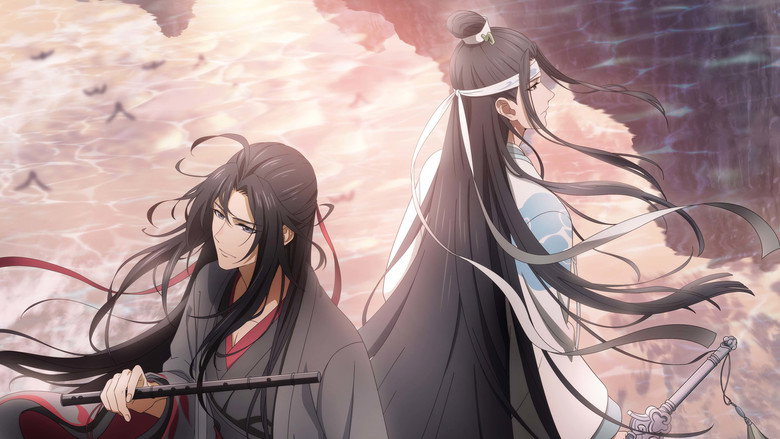
At a glance
- Chinese title
- 魔道祖师 (Mó Dào Zǔ Shī)
- Format
- Animated series, three seasons
- Source
- A novel by Mo Xiang Tong Xiu
- Related
- The Untamed (live action)
- Official streaming
- Crunchyroll (region dependent)
- Best for
- Xianxia fans, horror-tinged fantasy
What it is about
Wei Wuxian is a brilliant cultivator who is blamed for a catastrophic war and killed. Years later he returns in a new body, and the truth of what happened is slowly uncovered. If that sounds familiar, it is the same story that became The Untamed.
The animation follows the novel more closely in some places and leans harder into the horror. Corpse spirits, haunted villages and dark ritual give it a colder, stranger atmosphere than the live-action version.
Who should watch it
Best for: viewers who liked The Untamed and want to see the story with more visual freedom, or animation fans who want Chinese fantasy with a horror edge.
- You prefer animation to live-action costume drama.
- You want the darker, stranger version of the story.
- You are interested in how Chinese studios adapt popular novels.
Skip it if you have not seen the live action and want the most accessible version first; both are valid starting points, but the live action explains the clans more slowly.
Three reasons to watch
1. The art direction is distinctive
Ink-wash landscapes, muted colours and sudden horror imagery give the series a look that does not resemble Japanese anime. The animation treats the supernatural as genuinely unsettling.
2. The action is fluid
Sword work, talismans and musical cultivation are animated with weight. Fights are legible, and the camera is willing to hold a shot long enough for the choreography to read.
3. The relationship is allowed more room
Animation can show small gestures and long silences that live-action scheduling often cuts. The central partnership gets space to breathe, which is why many viewers find this version more emotionally direct.
The hidden culture detail
Wei Wuxian's cultivation uses a flute and the dead. In Chinese fantasy, music is often a legitimate spiritual tool: the guqin can calm or bind spirits, and certain melodies are treated as techniques. His Chenqing flute is therefore not a quirky weapon but a recognised form of ritual power, one associated with controlling corpses. The horror comes from the fact that he is good at it.
How the donghua differs from the live action
The animated version is not a summary of The Untamed; it is a different adaptation of the same novel, and the differences matter. Animation can hold a wide shot on a battlefield, show a ghost dissolving into mist, or let a character's face stay still for three seconds while the score does the work. Live action has to solve those moments with staging, and it often cuts them shorter.
The donghua is also more willing to be frightening. Corpse puppets, ritual arrays and the dead rising are rendered with a horror vocabulary that a prime-time drama has to soften. If you found the live action atmospheric but tame, the animation is the version that lets the supernatural stay supernatural.
The trade-off is intimacy. Live-action actors bring micro-expressions and physical chemistry that drawn characters cannot match, and the drama spends more time on the quiet scenes between the leads. The animation is faster and more plot-driven; the drama is slower and more emotional. Neither is wrong, and watching both is a legitimate way to experience the story.
The donghua also benefits from a tighter episode count. Each season covers a manageable chunk of the novel, which means fewer filler subplots and a clearer through-line. If you bounced off fifty live-action episodes, the animation is a much easier entry point into the same world.
Character design is another point of difference. The donghua gives each clan a distinct silhouette and colour scheme, so you can identify a character's allegiance before they speak. That visual clarity is something the live action has to achieve with costume and casting, and the animation can push it further because it is not constrained by real fabric or real weather.
The music deserves a mention too. The Chinese-language opening and ending themes are part of the fandom, and the score uses traditional instruments to keep the ghost-story tone consistent across episodes, even when the plot jumps between decades.
One practical warning: the seasons are released slowly, and the story is not finished. If you need a complete ending, the live action is the safer choice. If you can enjoy an ongoing adaptation, the animation rewards patience with some of the best supernatural set pieces in Chinese animation.
It is also, simply, a pleasure to look at. The costume embroidery, the rain, the lantern light and the way a talisman glows all suggest a production that cared about texture. If you only sample one episode, watch the first, then decide.
Where to watch
Licensed through Crunchyroll in most regions. For the live-action comparison, read our The Untamed guide. If you want another acclaimed Chinese animation, try Link Click.
Where to watch officially
These buttons open the licensed platform's own search page for this drama. Availability changes by country, so the platform page is the final word on subtitles and regions.
No torrents, mirrors or Google Drive copies. If a link ever lands somewhere unofficial, tell us at [email protected] and we will replace it.